A comprehensive guide to safeguarding your HTML code from unauthorized access and theft.
Introduction
Ever spent ages creating a killer website, only to worry someone might nick your code? You're not alone. These days, with info just a click away, keeping your HTML safe is super important. Whether you're a pro dev or just doing it for fun, protecting your work is a big deal. But how do you share your stuff without leaving it wide open? That's where HTML Obfuscation Tools come in - they're like your new best mate in keeping your source code safe.
Picture this: you've just launched an awesome site with cool features and eye-catching designs. Then bam! You find out someone's copied your code, ripping off your site's features without asking. Annoying, right? This is why HTML obfuscation tools are so handy. They take your readable HTML and turn it into something way more complex and harder to understand, putting off copycats and keeping your hard work safe.
But let's dig a bit deeper. What exactly is HTML obfuscation, and why should you care? How do these tools work, and which ones should you check out? This guide's gonna walk you through everything you need to know about protecting your HTML source, making sure your website stays uniquely yours.
Ready to jump in? Let's go!
Understanding HTML Obfuscation
What is HTML Obfuscation?
At its core, HTML obfuscation is about making your HTML code hard to read and get. It's like writing a secret note that only you can figure out. By messing up your code into a more confusing format, you make it way harder for others to copy or mess with it.
Think of your HTML code as a cool play you've written - full of characters and lines that bring your website to life. Now, imagine someone trying to rewrite your play without asking. HTML obfuscation acts like a shield, making sure your script stays safe from unwanted copycats.
Why Obfuscate Your HTML?
You might be thinking, "Why bother obfuscating my HTML?" Good question! Here's why it's worth it:
- Stopping Code Theft: Your HTML code is the bones and skin of your website. Protecting it means your unique design and features stay yours.
- Boosting Security: Messed-up code can be an extra layer of security, making it tougher for bad guys to find weak spots in your site.
- Staying Ahead of the Game: In a crowded market, having a unique, hard-to-copy website can make you stand out.
- Protecting Your Ideas: Your code is your creative and tech investment. Obfuscation helps keep this valuable stuff safe.
The Importance of Protecting Your Source Code
Preventing Code Theft
Let's face it - there are plenty of dodgy folks out there ready to grab impressive code for their own projects. By obfuscating your HTML, you make it way harder for these opportunists to copy and reuse your work. It's like hiding your secret recipe; even if someone gets a peek, they won't be able to recreate it easily.
Enhancing Security
Beyond just stopping code theft, obfuscation can beef up your website's security. Clear, easy-to-read code can sometimes show vulnerabilities that hackers can exploit. By obfuscating your HTML, you add an extra barrier, making it tougher for bad actors to spot and target weak points in your site.
Maintaining Competitive Advantage
In the fast-moving digital world, staying ahead is key. Unique website features and designs can give you an edge. Protecting your source code ensures that your innovations stay yours alone, stopping competitors from using your creative efforts to their advantage.
Latest Trends in HTML Obfuscation
Advanced Encryption Techniques
Encryption isn't just for securing data; it's big in obfuscating HTML too. Advanced encryption techniques turn your code into something that's not only harder to read but also tougher to decrypt.
Think of it as turning your plain text into a complex puzzle that needs a key to solve. This makes unauthorized access to your code way more challenging.
Dynamic Obfuscation Methods
Static obfuscation methods, while good, have their limits. Enter dynamic obfuscation, where the code changes in real-time or when triggered. This means even if someone cracks part of your code, it might change before they can use it.
It's like having a chameleon that keeps changing colors to blend in, making it nearly impossible to catch.
Integration with JavaScript
Mixing obfuscation with JavaScript adds another layer of complexity. JavaScript-powered obfuscation can dynamically change your HTML structure, making it even harder to reverse-engineer. This smooth integration ensures your obfuscated code works while staying protected.
Strategies for Effective HTML Obfuscation
Layered Obfuscation
Think of obfuscation like an onion - multiple layers that make it harder to peel. Using layered obfuscation means combining several techniques, like minification, encryption, and code splitting, to create a tough defense.
This multi-layered approach means that even if one layer is cracked, others stay intact, keeping protection going.
Using Multiple Tools
Relying on just one obfuscation tool might leave gaps in your protection. Instead, try using a mix of tools that are good at different parts of obfuscation. For example, one tool might be great at minifying CSS, while another focuses on encrypting JavaScript.
By using multiple tools, you create a more complete shield around your HTML code, making it much harder for others to figure out.
Regularly Updating Obfuscation Methods
The digital landscape is always changing, with new threats popping up regularly. To stay ahead, it's crucial to update your obfuscation methods now and then. This could mean adopting new tools, using the latest encryption techniques, or tweaking your current strategies to deal with newly found vulnerabilities.
Staying proactive ensures your protection methods keep working against evolving threats.
Essential HTML Obfuscation Tools
Tool 1: JavaScript Obfuscators
JavaScript obfuscators are among the most popular tools for protecting your HTML code. They turn readable JavaScript code into a confusing format that's tough to interpret. Some notable obfuscators include:
- Obfuscator.io: A free online tool that offers a range of obfuscation options, letting you customize the level of protection.
- Javascript Obfuscator by JSFiddle: Another reliable tool that provides comprehensive obfuscation, making your JavaScript code nearly unreadable.
Tool 2: CSS Minifiers
While often overlooked, your CSS code plays a big role in how your website looks. CSS minifiers not only reduce file size for faster load times but also make your code harder to read. Popular CSS minifiers include:
- CleanCSS: Offers advanced minification options, ensuring your CSS is both optimized and obfuscated.
- CSSNano: A lightweight tool that efficiently minifies and obfuscates your CSS files.
Tool 3: Online Obfuscation Services
For those who prefer a more hands-off approach, online obfuscation services provide a convenient solution. These platforms handle the obfuscation process for you, often offering extra security features. Examples include:
- Web Definer: Provides comprehensive obfuscation services, including HTML, CSS, and JavaScript protection.
- ShieldMe: Focuses on advanced encryption techniques, ensuring your code stays secure against sophisticated threats.
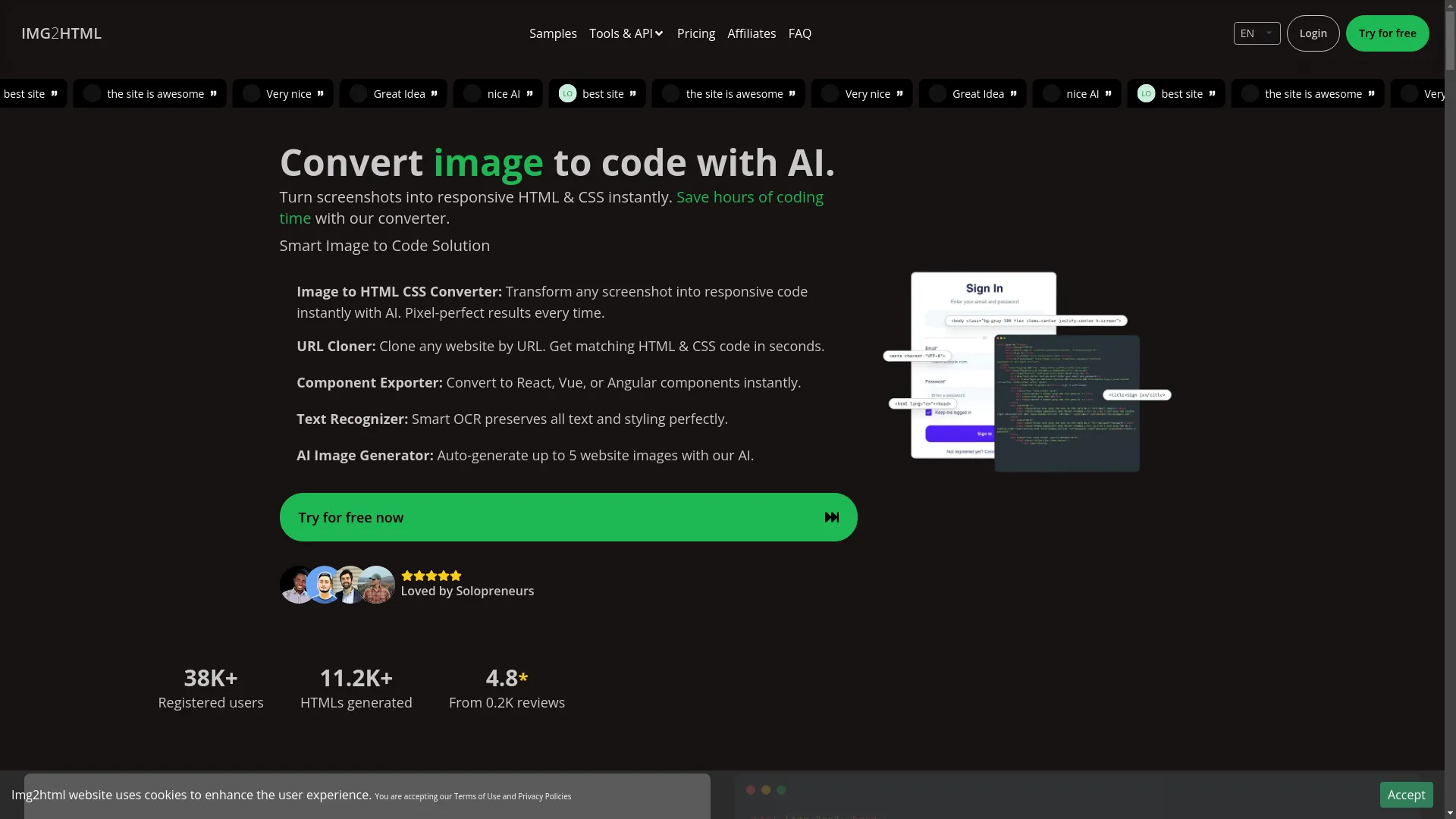
Tool 4: IMG2HTML
IMG2HTML
Speaking of IMG2HTML, this versatile tool is a game-changer for web developers. While mainly designed to convert images to HTML and CSS code using AI, IMG2HTML also includes obfuscation features to protect the generated code.
Imagine turning a screenshot of your design into a fully functional, responsive website while ensuring the underlying code stays secure. That's the magic of IMG2HTML. Whether you're a solopreneur, a student, or a seasoned developer, IMG2HTML streamlines your workflow while keeping your source code safe from prying eyes.
Key Features of IMG2HTML:
- AI-Powered Conversion: Transforms images into clean, responsive HTML & CSS code in seconds.
- Tailwind CSS Integration: Leverage the power of Tailwind CSS for stylish and efficient designs.
- Comprehensive Tech Stack Support: Compatible with frameworks like React, Vue, and Angular.
- Chrome Extension: Easily convert any part of a website into your desired front-end design.
- API Integration: Automate your workflow with the powerful IMG2HTML API.
Using tools like IMG2HTML not only boosts your coding efficiency but also ensures that the generated code is obfuscated, adding an extra layer of protection to your projects.
Role of Technology in HTML Obfuscation
AI and Machine Learning
Artificial Intelligence (AI) and Machine Learning (ML) are changing the game in HTML obfuscation. These technologies can analyze patterns in your code and apply smart obfuscation techniques that are both effective and efficient.
For instance, AI-powered tools can dynamically adjust the complexity of obfuscation based on how sensitive the code is, ensuring optimal protection without slowing things down.
Automation Tools
Automation is a big deal in HTML obfuscation. Automation tools can handle repetitive tasks, like code minification and encryption, freeing up your time to focus on more important parts of your project.
Tools like Gulp and Grunt can be set up to automate the obfuscation process, making sure your code is consistently protected every time you update.
Optimizing for Current Web Trends
Responsive Design Considerations
With so many mobile devices out there, responsive design is now expected. When obfuscating your HTML, it's crucial to make sure the protective measures don't mess with how responsive your site is.
Tools like IMG2HTML are great at generating responsive, clean code that stays obfuscated, ensuring your website looks good on all devices without compromising security.
Performance Optimization
Obfuscation shouldn't slow down your website. Finding the right balance between protection and speed is key. Use tools that offer optimized obfuscation techniques, reducing file sizes and speeding up load times while keeping your code secure.
For example, CleanCSS not only minifies your CSS but also makes sure the obfuscated code doesn't slow down your site, giving users a smooth experience.
Building Quality Networks to Enhance Security
Secure Hosting Solutions
Choosing a secure hosting provider is key to safeguarding your website. Go for hosting solutions that offer advanced security features, like firewalls, malware scanning, and regular backups.
Providers like SiteGround and Bluehost are known for their comprehensive security measures, ensuring your website stays protected from external threats.
Content Delivery Networks (CDNs)
Content Delivery Networks (CDNs) play a big role in both improving performance and security. By spreading your website's content across multiple servers globally, CDNs speed up load times and provide an extra layer of protection against Distributed Denial of Service (DDoS) attacks.
Platforms like Cloudflare offer integrated security features, including SSL encryption and threat mitigation, complementing your HTML obfuscation efforts to create a secure and efficient website.
Effective Strategies for Success
Balancing Obfuscation and Performance
While obfuscation boosts security, too much complexity can slow down your website. It's important to find a balance by applying obfuscation techniques that protect your code without significantly impacting performance.
Tools like IMG2HTML ensure that while your code stays protected, the performance remains optimized, giving users a smooth experience.
Monitoring and Maintenance
Obfuscation isn't a one-and-done task. Regularly check your website for any signs of breaches or code theft. Tools like Google Analytics and Sentry can help you track suspicious activities and address potential vulnerabilities quickly.
Also, keeping your obfuscation tools updated ensures that your protection methods stay effective against evolving threats.
Educating Your Team
If you're working with a team, make sure everyone understands why HTML obfuscation is important and follows best practices. Regular training sessions and clear documentation can help maintain a high standard of security across your projects.
User Experience and Performance Metrics
Impact on Load Times
One common worry with obfuscation is how it might affect load times. However, with the right tools and techniques, you can minimize any negative effects. For example, CSS minifiers not only obfuscate your stylesheets but also reduce file sizes, leading to faster load times.
IMG2HTML goes a step further by generating clean, optimized code that ensures your website stays fast and responsive, even after obfuscation.
User-Friendly Design
Obfuscation mainly targets the code behind the scenes, so it shouldn't affect the visual or interactive elements that users interact with. In fact, by simplifying your code, you can streamline the design process, making it easier to implement user-friendly features.

Imagine weaving a smooth fabric—each thread (or line of code) is perfectly aligned, ensuring the final product is both beautiful and functional. That's what effective obfuscation does for your website.
Measuring Success
How do you know if your obfuscation efforts are working? Monitoring key performance indicators (KPIs) is crucial. Track things like:
- Load Times: Make sure your website stays fast and responsive even after obfuscation.
- Security Incidents: Keep an eye out for any attempts to breach your site or steal your code.
- User Engagement: Check if your user experience remains unaffected or even improved.
Regularly reviewing these metrics helps you fine-tune your strategies, ensuring that your website stays both secure and user-friendly.
Conclusion
In the ever-changing digital world, protecting your HTML source code is more important than ever. HTML obfuscation tools provide a strong shield against code theft, boosting your website's security and keeping your competitive edge. From advanced encryption techniques to dynamic obfuscation methods, the tools and strategies available today are more effective and user-friendly than ever.
By taking a smart approach—balancing obfuscation with performance, using the latest technologies, and maintaining a secure network infrastructure—you can ensure that your website remains uniquely yours, protected against unwanted copying and malicious threats.
Remember, protecting your source code isn't just about security—it's about preserving the integrity and uniqueness of your creative and technical efforts. So, take the necessary steps today to fortify your website, and enjoy the peace of mind that comes with knowing your hard work is well-protected.
Ready to give it a go? Explore the range of HTML obfuscation tools out there and find the perfect fit for your needs. Your website deserves the best protection possible. Happy coding!
Frequently Asked Questions (FAQ)
1. What is HTML obfuscation?
HTML obfuscation is about making your HTML code hard to read and understand. It's done by turning the code into a more complex and less readable format, putting off potential copycats and protecting your source code from unauthorized access.
2. Why should I obfuscate my HTML code?
Obfuscating your HTML code helps prevent code theft, boosts security, maintains your competitive advantage, and protects your intellectual property. It acts as a deterrent against people or companies looking to copy or mess with your website's structure and design.
3. Can HTML obfuscation improve my website's security?
Yeah, HTML obfuscation can enhance your website's security by making it harder for bad actors to spot and exploit vulnerabilities in your code. While it's not a standalone security measure, it adds an extra layer of protection when combined with other security practices.
4. Will obfuscating my HTML code affect my website's performance?
Properly done obfuscation shouldn't significantly impact your website's performance. In some cases, obfuscation tools like minifiers can actually speed up load times by reducing file sizes. However, excessive or inefficient obfuscation techniques might slow things down, so it's important to find the right balance.
5. Are there free HTML obfuscation tools available?
Yep, there are free HTML obfuscation tools available online. Tools like Obfuscator.io and Javascript Obfuscator by JSFiddle offer free services that let you obfuscate your HTML, CSS, and JavaScript code. Plus, open-source tools and minifiers can be used without cost.
6. How does IMG2HTML contribute to HTML obfuscation?
IMG2HTML mainly focuses on converting images into HTML and CSS code using AI. However, the platform includes obfuscation features to protect the generated code, ensuring that the HTML and CSS are not easily readable or copyable. This adds an extra layer of protection to the code generated by the tool.
7. Can HTML obfuscation be reversed?
While obfuscation makes code harder to read and understand, it's not completely foolproof. Skilled individuals with the right tools and expertise might still be able to reverse-engineer obfuscated code. However, obfuscation significantly raises the barrier, deterring casual attempts to copy or tamper with your code.
8. Is HTML obfuscation compatible with all web browsers?
Yes, HTML obfuscation works with all modern web browsers. The process of obfuscation changes the readability of the code without affecting how it works, ensuring that your website runs smoothly across different browsers.
9. Should I obfuscate only HTML, or should I also obfuscate CSS and JavaScript?
For comprehensive protection, it's a good idea to obfuscate not just HTML but also CSS and JavaScript. Each layer of your website's code plays a role in how it works and looks. Protecting all these layers ensures a stronger defense against code theft and tampering.
10. How often should I update my obfuscation methods?
It's recommended to review and update your obfuscation methods every now and then, especially when there are big updates in web development practices or new security threats emerge. Regularly updating ensures that your protection strategies stay effective and in line with the latest technological advancements.