Texttohtml Ratio And Its Impact On Seo
Optimize el SEO mejorando la proporci\u00f3n de texto a HTML. Descubre c\u00f3mo afecta el SEO, mejora la experiencia del usuario y acelera tu sitio con Img2HTML y buenas pr\u00e1cticas.
Introduction
Hey there! Ever come across a website that looked amazing but took ages to load? Or maybe one that was quick but didn't have much to say? Getting the right mix of looks and content is super important, especially for SEO. Today, we're gonna dive into something that's been making waves in digital marketing: Text-to-HTML Ratio and How it Affects SEO.
Think of it like building a house. HTML is your framework, text is your furniture, and images are your decor. If you've got too much furniture and not enough framework, the house might fall apart. Same goes for websites - if there's not a good balance between text and HTML, your SEO could take a hit. But don't worry, we're here to help you figure it out, making it as easy as using Img2html's cool AI tools!
So grab a coffee, get comfy, and let's explore how getting your Text-to-HTML ratio right can boost your website's SEO and make it better for users.

Understanding Text-to-HTML Ratio
What's Text-to-HTML Ratio?
Basically, Text-to-HTML ratio is about how much visible text you have on a webpage compared to the amount of HTML code used to show that text. It's like comparing the amount of stuff you can see to the structure holding it up. Ideally, you want enough content (text) to give value to visitors without drowning in too much HTML code.
Why It's Important for SEO
Why should you care about this ratio? Good question! Search engines like Google look at your website based on different things, and Text-to-HTML ratio is one of them. A good balance makes sure search engine bots can easily read your content, which helps your site show up better in searches. Plus, cleaner code usually means faster loading times and a better experience for users - both super important for good SEO.

How Text-to-HTML Ratio Affects SEO
Search Engine Crawlers and Content Analysis
Search engine crawlers are like digital librarians, checking out your website to understand and index what's on it. A high Text-to-HTML ratio usually means your page has lots of good content, making it easier for crawlers to get what your page is about. On the other hand, if the ratio is low, it might mean your page has too much code, making it harder for crawlers to find the important stuff.
User Experience and Engagement
Ever tried reading a book where half the pages are just scribbles and symbols? Not fun, right? Same goes for websites with too much HTML code - it can slow things down and annoy users, making them leave quickly. A better Text-to-HTML ratio means visitors can get to your good content faster, keeping them interested and more likely to stick around.
Page Load Speed and Performance Metrics
How fast your page loads is super important for SEO rankings. Too much HTML code can make your webpage slow and clunky. Slow websites frustrate users and search engines don't like them either, often ranking them lower. By getting your Text-to-HTML ratio right, you can make your code cleaner, speed up your site, and make it perform better overall.
Making Your Text-to-HTML Ratio Better
Balancing Text and Code
Finding the right balance between text and HTML is like balancing your budget - tricky but important. Here are some tips to help:
- Get rid of unnecessary code: Remove extra HTML stuff you don't need and make your code structure simpler.
- Use CSS: Use CSS for styling instead of putting styles directly in HTML. This cuts down on HTML code and keeps content separate from how it looks.
- Make multimedia better: Compress images and use the right formats to make them load faster without looking bad.

Using Tools Like Img2HTML
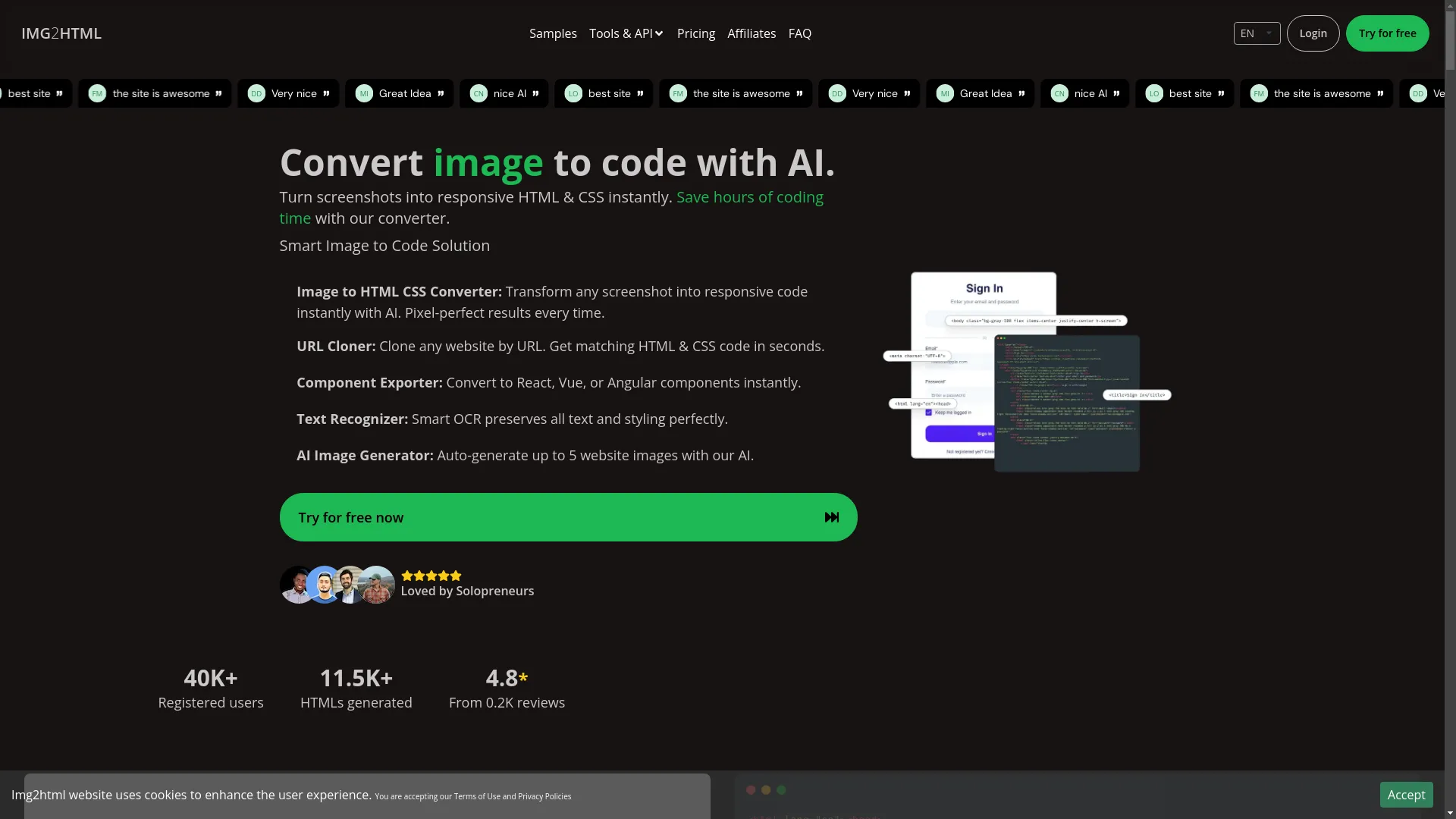
Imagine if you could magically turn your images into clean, responsive HTML and CSS code in seconds. Well, with tools like Img2HTML, you can! Img2HTML uses smart AI to turn images into code, helping you keep a good Text-to-HTML ratio without much effort.
For example, you upload a picture of your website design, and Img2HTML gives you the HTML and CSS code for it. This saves you tons of time coding by hand and makes sure your code is clean and good for SEO. Plus, it works with cool stuff like Tailwind CSS and modern frameworks like React, Vue, and Angular, making it awesome for developers and designers.
Best Practices for Clean and Efficient HTML
Keeping your HTML code clean is like keeping your workspace tidy - it helps you work better and makes fewer mistakes. Here are some good habits:
-
Use semantic HTML: Use tags like
<header>,<footer>,<article>to give meaning to your content. - Avoid inline styles: Instead of styling things directly in HTML, use separate CSS files.
- Compress your code: Make your HTML and CSS files smaller to help pages load faster.
- Use comments wisely: Comments help developers, but too many can add bulk to your HTML. Use them when needed, but don't go overboard.

Advanced Strategies and Trends
Responsive Design and Modern Frameworks
These days, with everyone using phones, responsive design is a must. Using frameworks like Bootstrap, Tailwind CSS, and others can help you make flexible, responsive layouts without tons of HTML code. These frameworks give you pre-made components and tools that cut down on custom coding, helping keep a good Text-to-HTML ratio.
Using AI and Automation
AI is changing web development, making tasks like optimizing Text-to-HTML ratio easier. Tools like Img2HTML use AI to turn images into clean code, automating what used to take ages to do by hand. Embracing AI and automation can lead to cleaner code, faster development, and better SEO performance.
Future Trends in Web Development and SEO
The digital world is always changing, and staying ahead means keeping an eye on what's coming:
- Progressive Web Apps (PWAs): These combine the best of web and mobile apps, giving users a smooth experience with better performance.
- Voice Search Optimization: As more people use voice search, making your content work well for voice queries will be crucial.
- Core Web Vitals: Google's focus on user experience things like loading speed, interactivity, and visual stability will shape SEO strategies.

How Technology Helps Manage Text-to-HTML Ratio
AI-Powered Tools and Their Benefits
AI tools like Img2HTML are here to make life easier for developers and designers. They offer several perks:
- Speed: Turn images into HTML and CSS code in seconds.
- Accuracy: AI makes sure the code matches your design perfectly.
- Efficiency: Less manual coding means more time for creative stuff.
- Versatility: Works with different frameworks and CSS libraries to keep your code modern and flexible.
Fitting into Development Workflows
Smoothly adding AI tools into your development process can really boost productivity. For example, Img2HTML has an API, letting you automate turning images into code within your existing tools and services. Whether you're making a simple website or a complex web platform, using AI-powered converters can streamline your work and keep a good Text-to-HTML ratio.
Case Study: Img2HTML in Action
Let's look at a real example. Meet Alex, a freelance web developer who used to spend hours turning design mockups into HTML and CSS code. Frustrated with how long it took, Alex tried Img2HTML. Within minutes, Alex uploaded some design images, and Img2HTML created clean, responsive code ready to use. The result? Alex could take on more projects, deliver high-quality work faster, and make clients happier - all while keeping an optimal Text-to-HTML ratio that boosted SEO performance.

Building Good Networks and Effective Strategies
Working with Developers and Designers
Good teamwork between developers and designers is key to maintaining a healthy Text-to-HTML ratio. Clear communication ensures designs are doable and HTML code stays clean and efficient. Using tools like Img2HTML can help bridge the gap between design and development, making transitions smoother and efforts better coordinated.
Keeping Up with SEO Best Practices
SEO is always changing, with search engines constantly updating how they work. Staying informed about the latest SEO best practices ensures your Text-to-HTML ratio keeps helping your rankings. Follow good SEO blogs , watch webinars, and join community forums to keep your knowledge fresh and relevant.

Always Improving and Testing
Never settle for "good enough." Regularly check your website's Text-to-HTML ratio and make changes as needed. Use tools like Google PageSpeed Insights , GTmetrix , and others to watch your site's performance and find areas to improve. Constantly testing and optimizing is essential for maintaining top-notch SEO performance.
Making User Experience and Performance Better
Why Fast Loading Times Matter
Nobody likes waiting for a webpage to load, right? Fast loading times are crucial for keeping visitors interested and reducing bounce rates. A balanced Text-to-HTML ratio helps pages load quicker by minimizing bloated code and ensuring your site runs smoothly. Remember, every second counts!
Mobile Optimization
With more people browsing on their phones, mobile optimization is a must. A good Text-to-HTML ratio ensures your site is not only responsive but also light enough to load quickly on mobile devices. This makes for a better user experience and positively impacts your SEO rankings.

Engaging and Readable Content
At the end of the day, your content is what keeps users coming back. A high Text-to-HTML ratio ensures your content is front and center, easy to read, and engaging. Use clear headings, short paragraphs, and relevant keywords to make your content appealing to both readers and search engines.

Conclusion
Balancing your Text-to-HTML ratio isn't just a technical thing - it's a smart move that can really boost your website's SEO performance and user experience. By understanding why this ratio matters, using advanced tools like Img2HTML, and staying up to date with the latest trends and best practices, you can create a website that not only looks great but also performs exceptionally well in search rankings.
So why wait? Start optimizing your Text-to-HTML ratio today and watch your SEO improve. Whether you're an experienced developer, a new designer, or a passionate entrepreneur, getting the right balance can make all the difference. And remember, tools like Img2HTML are here to make the journey smoother, faster, and more efficient. Happy optimizing!